

Skin aging and the global shift towards clinical actives
Our world has never been so rapid. With everyone moving at a fast pace and lifestyles evolving, you will see concerns like skin aging top the list of skincare issues. As our skin ages, it naturally loses its bounce and develops wrinkles.
This happens because our skin cells slow down, producing less of the collagen that keeps skin firm while breaking down the existing collagen much faster.
Traditional actives for skin aging
Common ingredients that have dominated anti-aging so far include:
Retinol – It is shown to improve wrinkles, fine lines, and pore size.
Hyaluronic acid – It boosts hydration and locks in moisture, improving skin elasticity.
Ceramides – They protect the skin barrier and defend it against external factors that accelerate skin aging.
The global shift towards clinical actives
With the global skincare market topping $100,000 million, consumer habits are rapidly changing. Today’s biggest trend is the crossover of clinical, medical-grade ingredients into mainstream, everyday products.
This shift is sparking a huge demand for powerful ingredients that promise to heal and renew the skin. A prime example is Polydeoxyribonucleotide (PDRN), which is quickly becoming one of the most popular names in skincare.
While it first gained fame as the star injectable ingredient in the clinic treatment Rejuran, PDRN is now making a major leap from doctors' offices into everyday, over-the-counter skincare products.
PDRN – The new age active for skin regeneration
Did you know? Long before it became the internet's favourite skincare obsession, PDRN was busy doing serious medical heavy lifting. In 1994, the Italian Medicines Agency (AIFA) approved these ultra-purified DNA fragments for repairing deep skin ulcers, healing surface wounds, and fixing damaged connective tissues.
New studies show that PDRN can visibly improve your skin from every angle—helping to smooth wrinkles, lock in moisture, fade dark spots, support hair growth, and strengthen a broken skin barrier.
What is PDRN?
PDRN is a natural DNA-based ingredient that is safely extracted from the reproductive cells of specific fish—mainly Chum salmon and Rainbow trout.
Recent lab tests reveal that PDRN acts as an antioxidant to fight damage, calms down inflammation, stops dark spots from forming, and actively triggers our skin to build fresh new collagen.
The biology and chemistry of PDRN
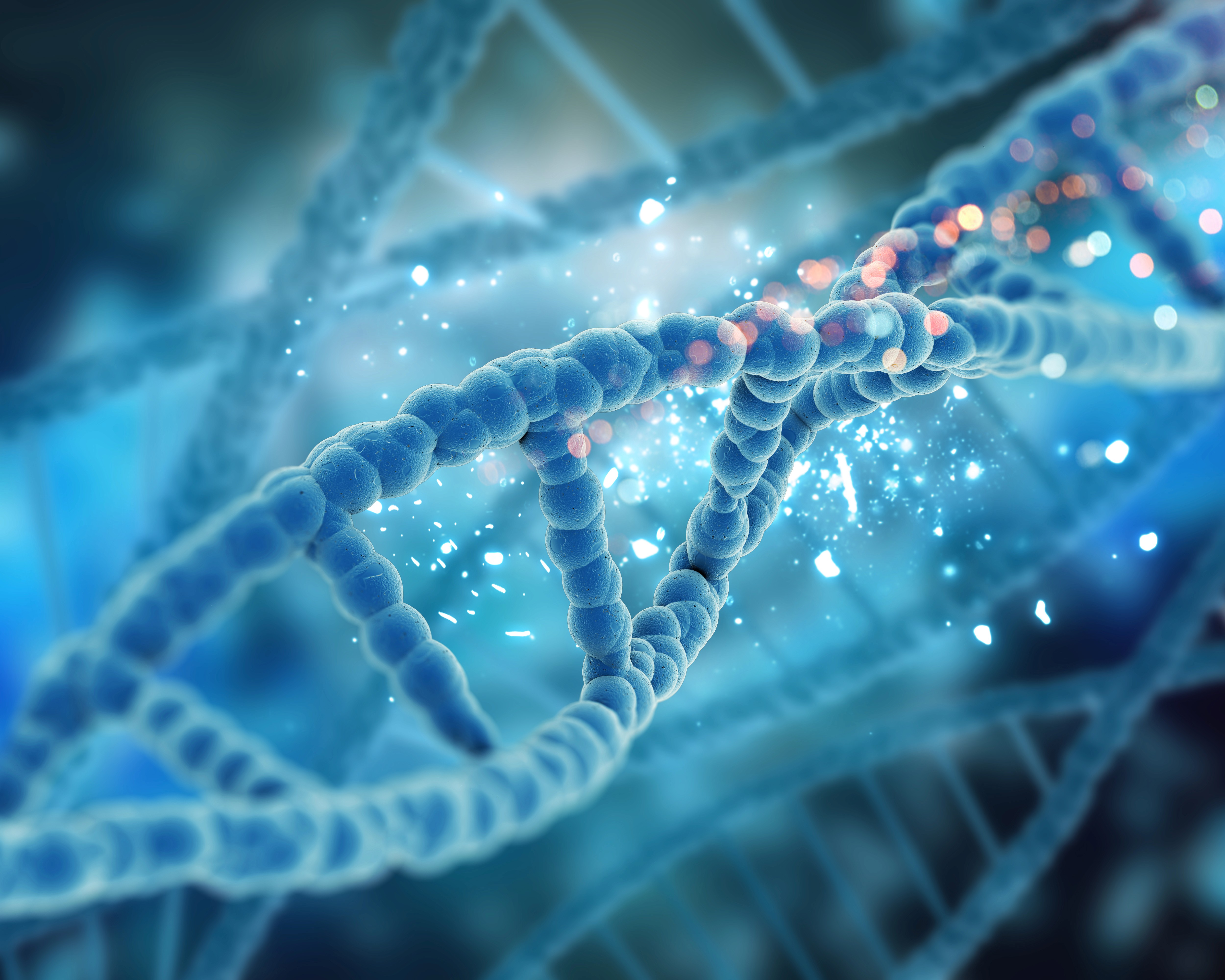
Think of nucleotides as the tiny building blocks that link together to construct our genetic code. Each individual unit is made up of a sugar, a phosphate, and a nitrogen base, and together they create the foundation for our DNA and RNA. PDRN obtained from salmon consists of short, straight DNA fragments that twist into a compact, helical shape.
PDRN gets straight to work by repairing damaged DNA and speeding up the skin's natural healing process. It actively spikes collagen production, improves healthy blood flow, and soothes inflammation on a cellular level. The most common source of PDRN is the sperm cells of the salmon fish.
Plant-based alternatives—often called phyto-PDRN—deliver the exact same skin-healing benefits as the traditional version, but with the bonus of being completely sustainable, cruelty-free, and ethically sourced.
One great example of this is Korean ginseng (Panax ginseng), where PDRN can be extracted directly from the plant's unique, air-grown roots.
Mechanism of action of PDRN
PDRN drives direct tissue healing and cellular repair through two primary mechanisms:
Its nucleotide components bind precisely to cellular A2A adenosine receptors to activate regenerative pathways.
It also participates in the cellular “salvage pathway” to efficiently supply cells with the necessary building blocks like nucleosides and nucleotides for rapid DNA synthesis and recovery.
A2A receptors can be found right on the outer surface of cells across many different types of human tissue.
Figure 1: PDRN mode of action – activation of adenosine A2 receptors and the salvage pathway (Squadrito F, et al. Pharmacological activity and clinical use of PDRN. Frontiers in Pharmacology. 2017;8:224.)
PDRN benefits
Regenerating tissues – PDRN speeds up wound healing by waking up the skin's main repair cells (fibroblasts)—making them multiply faster, move quickly to where they are needed, and stay healthy longer. Best of all, it achieves this safely without causing any harm or toxicity to your skin cells.
Promoting collagen production – Studies on human skin cells show that the more PDRN you use, the more collagen your skin makes. It does this by pulling off a clever genetic switch in the cell's nucleus: it turns down one gene and turns up another gene that promotes the growth of connective tissue. This double action gives your skin a massive net boost in natural collagen.
Decreasing dark spots – PDRN fades dark spots and evens out skin tone, and the more you use, the better it works. It stops pigmentation at the source by turning down the genes that trigger dark spots, turning off the skin's key colour-making enzyme (tyrosinase), and blocking the specific proteins (TRP-1 and TRP-2) that produce melanin.
PDRN has a major edge over classic skincare treatments. While popular anti-aging options like retinoids and Botox mostly just smooth out surface lines and wrinkles, PDRN goes much deeper. It targets the actual root causes of aging by forcing the skin to rebuild itself and manufacture fresh new collagen from within.
Proven PDRN Results
In laboratory models mixing human skin and pigment cells, PDRN significantly reduced overall melanin content. The most dramatic brightening results were proven at concentrations between 50 to 100 μg/mL, with a statistically significant impact (p < 0.05).
In dermatology, PDRN delivers major regenerative benefits, noticeably improving skin texture, minimising fine lines, and speeding up tissue recovery. Even though its current official regulatory approvals are restricted to dermal fillers and wound care, extensive preclinical data suggests a much broader spectrum of cosmetic and therapeutic uses.
In lab tests, PDRN consistently acts like a superfood for our skin cells. It causes human dermal fibroblasts—the cells that make collagen—to multiply rapidly, boosting their overall survival rate by about 25% compared to cells left untreated.
Tests on skin cells and animal models show that using 1 mM of PDRN, either on its own or mixed with powerhouses like vitamin C and niacinamide, massively cuts down on dark pigment and UV damage. At the same time, it pumps up collagen and elastin while lowering the stress that ages our skin cells.
Further research is needed to establish PDRN’s role in cosmetic applications like skincare and haircare.
Is PDRN safe for skin?
Research looking into PDRN has repeatedly proven that it is highly safe and very well-tolerated by the body. It doesn't cause any medical complications, and multiple studies have confirmed that this natural bio-ingredient is completely non-toxic.
Conclusion
With changing consumer behaviour, clinical actives like PDRN have gathered attention. This DNA-based ingredient is mainly obtained from fish like salmon. PDRN helps to repair damaged DNA, stimulates collagen production, and works via the regenerative and the salvage pathways.
In various lab tests, PDRN has worked in reducing melanin content, improving skin texture, minimising fine lines, and assisting in cell regeneration. More research to establish PDRN’s efficacy in personal care applications is needed to accelerate its use in such products.
References
He X, Wan F, Su W, Xie W. Research progress on skin aging and active ingredients. Molecules. 2023;28(14):5556.
The Next Era of Skincare Innovation & How Brands Can Respond.
Park S, Baek S, Shin HJ, et al. Polydeoxyribonucleotides as emerging therapeutics for skin diseases: clinical applications, pharmacological effects, molecular mechanisms, and potential modes of action. Applied Sciences. 2025;15(19):10437.
Arora G. Polynucleotides and polydeoxyribonucleotides in dermatology – A narrative review. Journal of Cutaneous & Aesthetic Surgery. 2026;19(1):1.
Squadrito F, Bitto A, Irrera N, et al. Pharmacological activity and clinical use of PDRN. Frontiers in Pharmacology. 2017;8:224.
Akaberi SM, Sharma K, Ahmadi-Ashtiani HR, Hedayati M. Polydeoxyribonucleotide in skincare and cosmetics: mechanisms, therapeutic applications, and advancements beyond wound healing and anti-aging.
Lee KS, Lee S, Wang H, et al. Analysis of skin regeneration and barrier-improvement efficacy of polydeoxyribonucleotide isolated from Panax ginseng (C.A. Mey.) adventitious root. Molecules. 2023;28(21):7240.
Recent Post


Creative gold for your inbox
Get the latest articles and insights delivered straight to your inbox. Sign up today to stay informed and ahead of the competition.